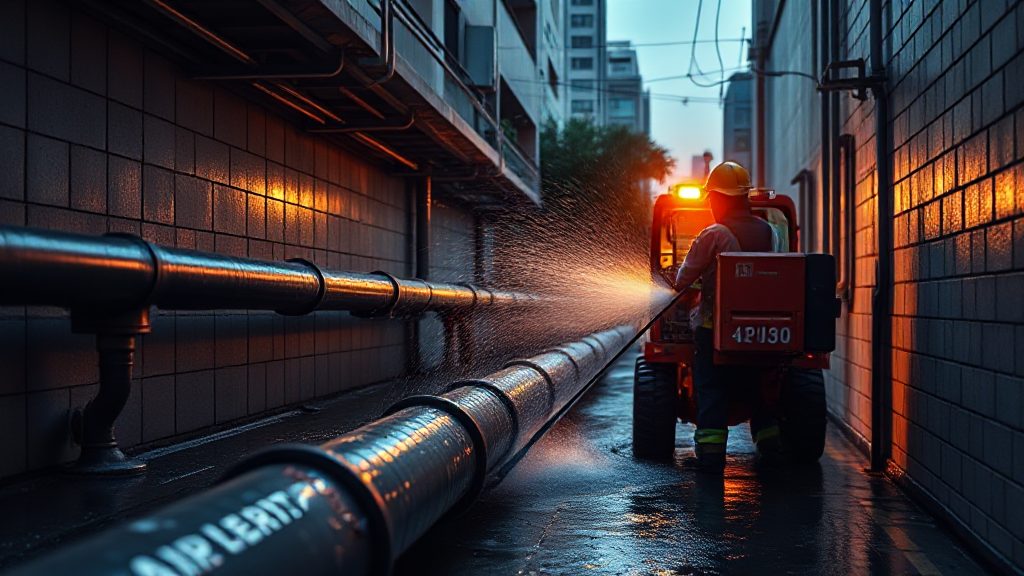
How Long a Real Desentupidora São Caetano do Sul Job Actually Takes
It is 7:40 on a Tuesday morning in the Barcelona neighborhood, and the kitchen sink has been draining slower for three days. By the time you call a desentupidora São Caetano do Sul, you already know the basics: someone answers, someone comes, the water goes down. What you probably do not know is how the visit actually unfolds when the blockage is not a simple soap clog. That is the part experienced users care about, and it is the part this review focuses on.
I tested the practical side of this service the way a skeptical repeat customer would: timing the call, watching the diagnosis, asking what changes when the problem is in the building’s main line rather than under the sink. The short answer is that a straightforward residential unclogging in São Caetano do Sul usually finishes within one visit, while anything touching the condominium’s shared network or a septic tank takes longer and costs more. The longer answer is below, question by question.
What does a first-time caller usually get wrong about response time?
Beginners assume the clock starts when the technician arrives. In practice, the clock that matters starts when you describe the problem well enough for the dispatcher to send the right equipment. A desentupidora São Caetano do Sul SP crew that arrives with only a manual snake will lose an hour if the real blockage needs hydrojetting. So the first lesson is that a precise phone description is not small talk; it is logistics.
Say where the water backs up, how many fixtures are affected, whether there is a smell, and whether the property is a house, an apartment or a commercial kitchen. Those four details let the company choose between a drain snake, a high-pressure jetter and a vacuum truck before leaving the yard. Accurate triage on the phone is the single biggest time-saver in an emergency call.
What information shortens the visit most?
The age of the building and the material of the pipes matter more than most people realize. Older homes in São Caetano do Sul often still have clay or cast-iron lines, which behave differently under pressure than modern PVC. If you know the approximate year of construction, mention it.
Also mention any previous unclogging in the last twelve months. A drain that clogs twice a year is not a drain problem; it is a pipe condition problem, and the technician will approach it differently from a one-off blockage.
Why does the same job take different times in different neighborhoods?
Access is the hidden variable. A house with a clean inspection box in the front yard can be serviced in twenty minutes. An apartment where the only access is a shaft behind a cabinet can take three times as long before any water moves. In dense commercial streets, parking and hose routing add real minutes.
This is why an experienced customer asks about access before asking about price. The quote is only meaningful once the technician knows what has to be opened, moved or protected to reach the line.
What changes when the blockage is in the building’s main line?
This is where beginner expectations and experienced expectations split most sharply. A sink clog is a local problem. A main-line blockage is a shared-infrastructure problem, and it involves the condominium, the neighbors and sometimes the utility. A desentupidora em São Caetano do Sul SP handling this kind of call will typically inspect first, then decide whether hydrojetting is enough or whether a camera inspection is needed.
Experienced building managers ask three questions before authorizing work: where is the inspection box, who else is affected, and what is the risk of sewage backing into ground-floor units. Those questions change the sequence of the job, not just its duration.
When is hydrojetting the right call?
Hydrojetting uses high-pressure water to scour the inside of the pipe, removing grease, scale and root intrusion rather than just punching a hole through the clog. It is the correct choice when the line has a history of recurring blockages or when the pipe diameter is large enough to justify it.
It is not the right first move for every drain. On fragile or heavily deteriorated lines, pressure has to be adjusted or avoided. A good technician explains why a method was chosen, not just which method was used.
What does camera inspection add?
Camera inspection turns a guess into a diagnosis. It shows whether the pipe is cracked, misaligned, invaded by roots or simply coated in grease. For a condominium, that footage is also documentation: it justifies the expense to residents and supports any future maintenance planning.
For a homeowner, camera inspection is usually worth it when the same line clogs repeatedly. Paying to unclog the same pipe three times costs more than inspecting it once.
How does a septic tank change the schedule?
Properties outside the main sewage network depend on a septic tank, and that changes everything about timing. A tank that is full does not just drain slowly; it can back up into the lowest fixtures in the house. Emptying it requires a vacuum truck, and the truck needs access.
Experienced owners schedule septic cleaning before the tank is full, not after. They also know that the truck’s arrival is the long pole in the tent: the pumping itself is quick, but routing the hose and disposing of the waste properly takes planning.
What should you have ready before the truck arrives?
- Clear access to the tank lid, including any lawn furniture or planters
- The approximate location of the tank if it is buried
- Information on the last time it was emptied
- Any record of previous repairs to the tank or drain field
Why does preventive maintenance pay off here?
A tank that is maintained on a schedule rarely fails at the worst possible moment. The same logic applies to grease traps in commercial kitchens and to shared lines in condominiums. Preventive maintenance is cheaper than emergency response almost every time.
The trade-off is scheduling: maintenance happens when it is convenient, emergencies happen when they are not. Experienced users accept the inconvenience of a planned visit to avoid the disruption of an unplanned one.
What separates a proper emergency visit from a rushed one?
The difference is usually visible in the first ten minutes. A rushed visit starts with equipment. A proper visit starts with questions and a look at the affected area. If the technician does not ask what changed recently, what was poured down the drain, or whether the problem is intermittent, the diagnosis is a guess.
Emergency service at night or on weekends adds pressure, and that pressure is exactly when shortcuts happen. A reliable company protects the floor, contains the water, and confirms the flow is restored before packing up.
Which signs mean the job was not really finished?
Water draining slowly after the technician leaves is the classic warning. So is a gurgling sound from another fixture, or a smell that was not there before. Any of these means the blockage was bypassed, not removed.
Ask the technician to run water through the line and watch it with you. It takes two minutes and prevents a second call.
What should the invoice and report include?
A proper report names the line that was serviced, the method used, the condition observed and any recommendation for follow-up. For condominiums, that document is what justifies the cost to the board and prevents disputes later.
If the company cannot describe what it did in writing, the record is incomplete.
How do costs and trade-offs actually compare?
Price comparisons between providers are only meaningful when the scope is the same. A cheap quote for a simple snake job and a higher quote for hydrojetting plus inspection are not competing offers; they are different services. Experienced customers compare scope, method and documentation, not just the final number.
| Scenario | Typical approach | What drives the cost |
|---|---|---|
| Single slow drain in a house | Manual snake or small jetter | Access and time on site |
| Recurring blockage in a shared line | Hydrojetting, possibly camera inspection | Equipment, pipe condition, documentation |
| Full septic tank | Vacuum truck pumping | Truck access, waste disposal, tank size |
| Night or weekend emergency | Same methods, out-of-hours dispatch | Timing and urgency |
The trade-off is rarely about finding the cheapest option. It is about matching the method to the condition of the pipe so the same problem does not return next month.
When is it worth paying more?
Pay more when the cheaper option is a temporary fix on a structural problem. A cracked pipe will keep clogging no matter how many times it is snaked. Paying for inspection and a proper repair once is usually cheaper than repeated emergency calls.
When is the basic service enough?
The basic service is enough when the blockage is recent, isolated to one fixture, and there is no history of repeat problems. In that case, a straightforward unclogging is the correct and economical choice.
What do experienced users do differently before they call?
They keep a short record: which drains have clogged, when, and what was done. They know where the inspection box is. They know whether the property is on the main network or a septic tank. That small amount of preparation turns a stressful call into a routine one.
They also ask about availability before an emergency happens. Knowing which company serves São Caetano do Sul at night, and what information that company needs, removes the panic from the worst moment. The difference between a beginner and an experienced user is not knowledge of plumbing; it is preparation.
If you take one thing from this review, take the sequence: describe the problem precisely, ask what method will be used and why, confirm the flow is restored before the technician leaves, and keep the written report. Do that, and the next unclogging stops being an emergency and becomes a scheduled task.