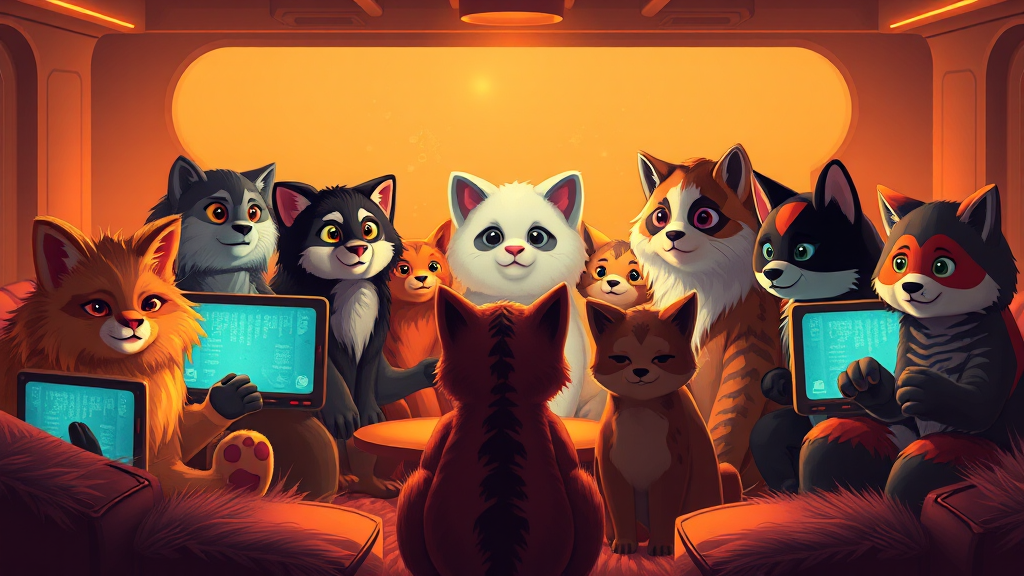
Inside https://crushon.ai/trends/furry: How AI Furry Characters Are Reshaping Digital Storytelling
Digital fandom has always moved faster than the platforms built to contain it. Long before mainstream social networks figured out how to serve niche communities, fan artists, writers, and roleplayers were already building their own spaces, languages, and conventions. Today, one of the most interesting collisions happening online sits at the intersection of that fan culture and conversational AI. The page at https://crushon.ai/trends/furry is a useful window into that collision, showing how furry-themed AI characters have become a genuine trend rather than a passing curiosity. Understanding what is happening there tells us a lot about where interactive entertainment is heading next.
This article explores the furry trend as it appears on Crushon, why it resonates with users, how AI character platforms handle creative identity, and what responsible participation looks like. Whether you are a longtime member of the fandom or simply curious about how AI companions work, the pattern is worth examining closely.
What the Furry Trend Actually Looks Like on Crushon
The word “furry” describes a broad subculture centered on anthropomorphic animal characters — creatures that combine human traits with animal forms. That community has produced enormous amounts of art, fiction, roleplay, and costume craft over several decades. What is new is that conversational AI now lets people interact with those characters directly, in real time, rather than only reading about them or viewing static artwork.
On the trends page, furry-themed characters appear as a distinct and active category. Users can browse characters built around wolves, foxes, dragons, hybrid creatures, and countless original designs. Each character typically carries its own personality description, backstory, speaking style, and scenario. The result is closer to an interactive story than a simple chatbot. You are not just asking questions of a generic assistant; you are stepping into a narrative with a defined cast.
This distinction matters. The appeal of furry characters has always been partly about self-expression and partly about escapism. AI adds a third element: responsiveness. A character that can react, remember context, and adapt its tone creates a feedback loop that static media cannot replicate. That is the core reason the trend keeps growing.
Why Anthropomorphic Characters Fit AI So Naturally
There is a practical reason furry characters work so well in AI form. Anthropomorphic figures are inherently flexible. Because they are already a blend of human and animal traits, users and creators have enormous latitude in defining who they are. A character can be gentle or sharp, formal or playful, grounded or mythic. The form does not constrain the personality; it amplifies it.
Contrast this with AI characters based on realistic humans. Those tend to invite direct comparison to real people, which raises expectations about accuracy and can feel uncanny. Anthropomorphic characters sidestep that problem. Nobody expects a dragon to behave exactly like a coworker, so the interaction feels more like collaborative storytelling and less like a simulation of a real relationship. That freedom is precisely what makes the format durable.
There is also a visual and emotional dimension. Animal traits carry built-in symbolism — loyalty, cunning, warmth, wildness — that creators can lean into or deliberately subvert. A fox character who is earnest rather than sly, or a wolf who is shy rather than dominant, becomes interesting precisely because it plays against type. AI platforms give those choices room to breathe through dialogue rather than description alone.
From Static Art to Living Dialogue: A Shift in Fan Creativity
For years, the primary creative output of the furry fandom was visual art and written fiction. Both remain central. But AI characters introduce a third mode: interactive performance. A creator does not just draw a character or write their story; they define how that character responds, what they remember, and how they evolve across a conversation.
This shift has real consequences for how fans think about authorship. When you build a character and then interact with it, you are both creator and audience. The character’s responses are partly your design and partly the model’s interpretation. That blurry line is unfamiliar, and it is exactly why the trend is culturally interesting. It is not simply a new tool; it is a new relationship between creator and creation.
Platforms that host these characters tend to encourage experimentation. Users can iterate on a persona, adjust tone, and refine backstory based on how conversations actually go. Over time, popular characters develop recognizable voices. Some become recurring figures within a community, referenced and remixed by others. That is the same dynamic that built fan universes around comics, games, and animation — now happening faster and with more participation.
What Makes a Furry AI Character Engaging
Not every character gains traction. The ones that do tend to share a few qualities. First, they have a clear identity. Vague characters feel interchangeable; specific ones feel real. A character with a defined role, history, and set of values gives the conversation something to push against.
Second, they have consistent voice. Tone matters more than trivia. A character who speaks in a distinctive way is more memorable than one who simply knows a lot of facts. Consistency is what makes a persona feel like a persona rather than a search engine with a costume.
Third, they leave room for the user. The best characters are not monologues. They ask questions, react to choices, and create space for the other person to shape the scene. That collaborative quality is what turns a chat into a story.
Finally, they respect boundaries. Characters designed with clear limits tend to produce better experiences than ones built purely for shock value. This is true across all AI character categories, but it matters especially in creative communities where trust and shared norms are important.
Responsible Participation in AI Character Communities
Any fast-growing interactive platform raises questions about safety and responsibility. AI character communities are no exception. Users should approach them with the same awareness they would bring to any online space where strangers interact and content is user-generated.
Practical habits help. Read platform guidelines before diving in. Use reporting and blocking tools when something feels off. Be thoughtful about what personal information you share, even in seemingly private conversations. Treat AI characters as creative constructs, not as sources of factual advice or emotional dependency. They are designed for entertainment and imaginative play, and they work best within those bounds.
Creators have responsibilities too. A well-designed character includes sensible limits and avoids content that could cause harm. The healthiest communities tend to be the ones where creators and users both treat the space as a shared creative project rather than a free-for-all.
The Bigger Picture: Niche Communities and Mainstream AI
It is tempting to treat furry AI characters as a niche curiosity. But niche communities have repeatedly been the proving ground for technologies that later go mainstream. Early internet forums, fan fiction archives, and modding scenes all looked marginal at first and ended up shaping how the wider web works.
The furry trend on Crushon fits that pattern. It demonstrates demand for personalized, persistent, character-driven AI interaction. It shows that users want to co-create rather than passively consume. And it reveals that identity and self-expression remain powerful drivers of technology adoption, even in tools that might initially seem purely functional.
For anyone watching the AI companion space, this category is worth following. It is where design choices about memory, personality, and boundaries are being tested in real time by a community that cares deeply about character. Those lessons will influence how AI characters of all kinds are built in the years ahead.
Frequently Asked Questions
What does the furry trend on Crushon involve?
It refers to a category of AI characters built around anthropomorphic animal personas. Users browse, chat with, and sometimes create characters that have defined personalities, backstories, and speaking styles, turning conversations into interactive storytelling.
Are these AI characters the same as real people?
No. They are creative constructs generated by software. They can be engaging and consistent, but they are not human, do not have real feelings, and should not be treated as substitutes for professional advice or genuine human relationships.
Can anyone create a furry AI character?
Many platforms allow users to design characters, though specific features and rules vary. Creators typically define a name, appearance, personality, and scenario. Following platform guidelines and respecting community norms is important.
Why is this trend growing so quickly?
It combines three strong drivers: the long-standing appeal of anthropomorphic characters, the flexibility of AI dialogue, and the desire for personalized interactive entertainment. Together they create an experience that static media cannot easily match.
Is it safe to use AI character platforms?
As with any online community, safety depends on responsible use. Read the platform’s rules, protect your personal information, use reporting tools, and keep expectations realistic. Treat the experience as entertainment rather than a source of factual or emotional support.
Readers who are interested in this topic will benefit from exploring multiple perspectives and understanding the nuanced approaches that industry leaders recommend. Taking time to research thoroughly ensures better outcomes and more informed decision-making.
Those looking to gain deeper knowledge in this area should consider following expert analysis, staying updated with the latest developments, and engaging with professional communities where these topics are discussed in detail.
A comprehensive understanding of this subject requires looking at both theoretical foundations and practical applications. By combining study with hands-on experience, learners can develop a well-rounded perspective that serves them well in real-world scenarios.
As the landscape continues to shift and evolve, staying informed about emerging trends and best practices becomes increasingly valuable. This ensures you remain competitive and capable of adapting to new challenges as they arise.